Signs You Need Repiping in Pre-1970 Auburn AL Homes
Auburn, Alabama carries a lot of history in its older neighborhoods, and homes built before 1970 are no exception. Many of those houses were plumbed with galvanized steel or early copper pipe that has now been in the ground and behind walls for more than five decades. That lifespan is well beyond what most plumbing materials were designed to handle. If you own or manage one of these homes near the Plains, Moores Mill Road corridor, or the historic streets close to downtown Auburn, understanding the warning signs of failing pipe systems can save you from serious water damage and costly emergency repairs.
Why Pre-1970 Auburn Homes Face Higher Repiping Risk
The construction era matters enormously when evaluating plumbing health. Homes built before 1970 in Alabama were commonly plumbed with galvanized iron pipe, which is steel coated with a thin layer of zinc. That zinc coating corrodes over time, especially when exposed to the moderately hard water common to Lee County. Once the zinc wears away, the exposed steel rusts from the inside out. The corrosion builds up as scale on the inner walls of the pipe, progressively narrowing the passage and degrading water quality. In many Auburn homes from this period, that process has been running for fifty or sixty years without interruption.
Early copper installations from this era are not automatically problem-free either. Copper pipe installed between the 1950s and 1970s can experience pinhole leaks from pitting corrosion, particularly where flux residue was left in joints during original installation. If your home has not had any significant plumbing work done since it was built, there is a reasonable probability that the original pipe is still in service and approaching the end of its useful life.
Discolored Water Is One of the Clearest Indicators
If the water running from your taps carries a brown, reddish, or orange tint, especially first thing in the morning or after a period of low use, you are almost certainly seeing rust and iron oxide flaking off the interior of corroded galvanized pipe. This is not a cosmetic nuisance. It means the pipe wall has degraded to the point where particulate is entering your water supply.
Discoloration that clears up after running the water for a minute or two is often dismissed as a temporary issue, but in pre-1970 Auburn homes that pattern typically signals widespread corrosion throughout the supply lines. Flushing the line does not remove the corrosion. It only pushes the loosened material downstream until more accumulates. If discolored water is a recurring experience in your home, a professional evaluation of the pipe condition is warranted before you experience a more serious failure.
Dropping Water Pressure Throughout the House
Reduced water pressure that affects multiple fixtures simultaneously is a strong indicator of internal scale buildup in galvanized pipe. When mineral deposits and rust accumulate along the interior pipe wall over decades, the effective diameter of the pipe shrinks. A pipe that originally delivered full flow may now pass only a fraction of its designed capacity because the bore has been reduced to a fraction of its original size by accumulated scale.
In Auburn neighborhoods like Cary Woods or the older sections near Magnolia Avenue, this is a common complaint in homes that have not been updated. Homeowners often attribute the pressure loss to city supply issues or fixture problems, but when multiple taps throughout the house all show the same reduction, the supply lines themselves are the more likely culprit. A licensed plumber can use diagnostic tools to confirm whether internal scaling is responsible.
Recurring Leaks at Joints and Fittings
One or two isolated leaks over the life of a home may be coincidental. But when you find yourself calling a plumber repeatedly for leaks that keep appearing at different joints and fittings throughout the house, that pattern reflects systemic pipe degradation rather than isolated failures. In aging galvanized systems, corrosion at threaded connections is especially common. The threading is where the pipe wall is thinnest, and corrosion concentrates there, eventually eating through the metal entirely.
Repairing each joint individually extends the emergency timeline but does not address the underlying condition of the pipe. For Repiping Services in Auburn, the cost of repeated spot repairs often approaches or exceeds the investment of a full repipe over time, with none of the long-term benefit. Once a galvanized system begins failing at multiple locations, the entire system has typically reached the end of its service life.
Sulfur Smell or Metallic Taste in the Water
Water that carries a metallic taste or a faint sulfur odor from your taps is another flag that pipe corrosion has progressed to a problematic stage. The metallic flavor comes from elevated levels of iron, copper, or zinc dissolving into the water as it contacts corroded pipe surfaces. This is not only unpleasant but can indicate mineral concentrations that exceed safe thresholds for drinking water.
Alabama drinking water standards require water to be safe at the point of delivery from the utility, but those standards do not account for contamination that occurs within private plumbing systems. If your home's supply lines are actively corroding, the water quality leaving your tap can differ significantly from what entered at the meter. Testing your water at the tap rather than at the meter gives you a realistic picture of what your household is actually consuming.
Visible Corrosion on Exposed Pipe
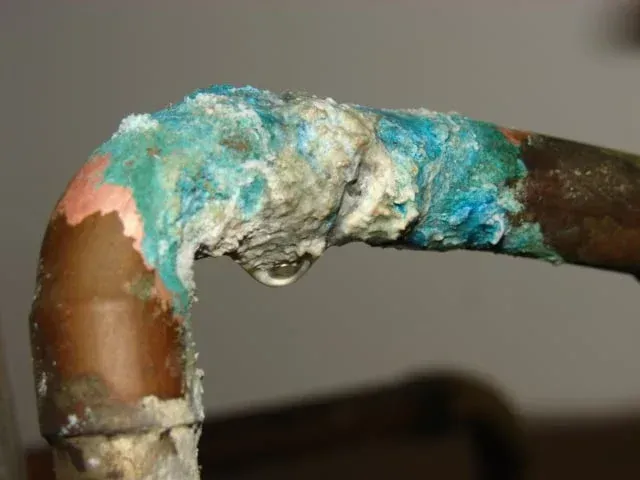
Not all plumbing is hidden behind drywall. Basements, crawl spaces, utility rooms, and under-sink areas often expose sections of pipe that you can inspect visually. If you see heavy orange rust, green-white patina on copper, or powdery mineral buildup around fittings, those visible sections are telling you something about the hidden sections you cannot see. Corrosion does not stop at convenient inspection points. If it is visible on accessible pipe, it is almost certainly present throughout the system.
Pre-1970 Auburn homes in areas like Wire Road or the older blocks near the Auburn University campus frequently have crawl space plumbing that has been exposed to moisture and seasonal temperature swings for decades. These conditions accelerate corrosion and reduce the remaining useful life of already aged pipe.
What to Do When You Recognize These Signs
Identifying warning signs is only useful if you act on them before a failure causes water damage to your home's structure, flooring, or insulation. A professional assessment from a licensed plumber familiar with Lee County's older housing stock gives you an accurate picture of how much service life remains in your current system and what a full repipe would involve for your specific home layout.
For a thorough understanding of what the process involves from start to finish, review the whole-home repiping overview for Auburn homeowners. That resource covers timeline, materials, and what to expect when your plumber replaces supply lines throughout the house.
The warning set described here — discolored water, pressure loss, recurring leaks, water taste or odor, and visible corrosion — does not mean your home is uninhabitable. It means the plumbing system that was installed when Eisenhower or Kennedy was president has reached the point where continued reliance on it carries measurable risk. Acting on these signs proactively, rather than waiting for a catastrophic failure, is the most cost-effective path forward for Auburn homeowners in older properties.
