Cast Iron Sewer Line Failure in Pre-1970 Auburn AL Homes
Older homes carry a lot of character, but they also carry aging infrastructure that was never meant to last indefinitely. If your Auburn home was built before 1970, there is a strong probability that your sewer system is running on original cast iron pipe. That pipe has been underground, handling waste and moisture, for more than five decades. Even the most durable materials reach the end of their functional life, and cast iron sewer lines are no exception. Understanding what happens when these systems begin to fail — and what your options are — can save you from a much larger and more disruptive problem down the road.
Why Cast Iron Was the Standard Before 1970
Cast iron dominated residential plumbing for most of the twentieth century, and for good reason. It was strong, relatively quiet compared to other materials, and capable of handling the demands of household waste lines. Builders throughout Auburn and the broader Alabama region used it as the default choice for drain, waste, and vent systems from the early 1900s through the late 1960s, when PVC began to replace it in new construction.
The material itself is not inherently flawed. In ideal conditions, cast iron can last 50 to 100 years. The problem is that many of Auburn's pre-1970 homes are now sitting at or well beyond that threshold. Soil chemistry, moisture levels, root pressure, and decades of waste flow have taken a cumulative toll that no amount of maintenance can fully reverse.
How Cast Iron Sewer Lines Degrade Over Time
Cast iron corrodes from the inside out. Hydrogen sulfide gas — a natural byproduct of organic waste — reacts with moisture inside the pipe to form sulfuric acid. That acid eats away at the interior pipe walls gradually, thinning them until sections begin to crack, separate, or collapse entirely. This process accelerates in pipes that were not lined or coated during installation, which describes most residential cast iron from this era.
External corrosion is also a factor. Auburn's clay-heavy soils retain moisture, and buried cast iron sitting in damp, slightly acidic ground corrodes on the outside surface as well. Over decades, the combination of internal chemical attack and external oxidation leaves pipe walls pitted, brittle, and structurally compromised. A section that looks intact from the outside may be nearly hollow with rust on the inside.
Joint failure is another common failure mode. Older cast iron systems used hub-and-spigot connections packed with lead and oakum. As these joints age, the packing shrinks, cracks, or displaces entirely, allowing groundwater infiltration and sewage exfiltration — neither of which is acceptable in a functioning sewer line.
Signs Your Auburn Home May Have a Failing Cast Iron Line
The warning signs of cast iron failure are often gradual, which is part of what makes them dangerous. Homeowners dismiss early indicators as minor inconveniences, and by the time the problem becomes undeniable, significant damage has already occurred. Watch for the following:
- Slow drains throughout the house — not isolated to one fixture, but multiple drains losing performance simultaneously
- Frequent drain clogs that clear temporarily but keep returning
- Sewage odors inside or around the home's foundation without a visible source
- Wet spots, sinkholes, or unusually lush grass in the yard above the sewer line path
- Gurgling sounds from toilets or drains when other fixtures are in use
- Pest activity including roaches or rodents accessing the home through cracked underground lines
In Auburn's older neighborhoods — areas like Donahue Acres, portions of the Samford Avenue corridor, and historic blocks near downtown — these symptoms show up with regularity in homes that have never had their sewer lines inspected or replaced. If your home is in this category, a camera inspection is the most direct way to get an honest picture of what you are dealing with.
What a Sewer Camera Inspection Reveals
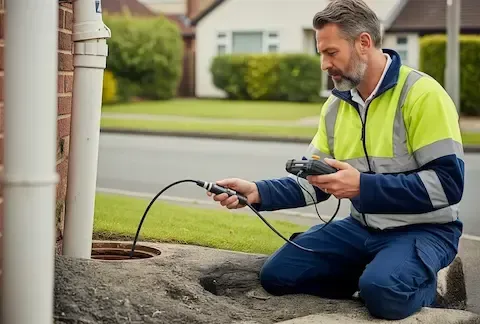
A professional sewer camera inspection threads a small camera through your drain line from a cleanout or toilet base and transmits real-time video of the pipe interior. For cast iron lines, this inspection typically reveals one or more of the following conditions: active corrosion and scale buildup, cracked or collapsed sections, separated joints, root intrusion through failed joints, and sediment accumulation from years of scale flaking off pipe walls.
If you are also dealing with tree root intrusion in mature neighborhoods, cast iron's failing joints are often the entry point roots exploit. Root pressure compounds the structural damage already underway from corrosion, making combined failure especially common in older Auburn properties with mature tree canopies.
The inspection footage gives you and your plumber a clear basis for deciding between repair, partial replacement, lining, or full replacement — rather than guessing.
Replacement Options for Cast Iron Sewer Lines
When a cast iron sewer line is diagnosed as failed or near-failed, you generally have three paths forward.
Open-cut replacement involves excavating along the pipe's path, removing the old cast iron, and installing new PVC or ABS drain pipe. It is the most straightforward method and allows complete visual inspection of the surrounding soil and any damage to the foundation or yard. For lines with collapsed sections or severe joint separation, open-cut is often the most appropriate approach.
Pipe bursting is a trenchless method where a hydraulic head is pulled through the existing pipe, fracturing the old cast iron outward while simultaneously pulling new pipe into position. It requires minimal excavation and preserves most of your yard. It works well when the pipe path is relatively straight and the soil has not shifted enough to cause alignment problems.
Cured-in-place pipe lining (CIPP) involves inserting a resin-saturated liner into the existing pipe and curing it in place, creating a new pipe within the old one. It is less invasive than either excavation method, but it requires that the existing pipe have enough structural integrity to hold the liner during installation. Collapsed or severely deteriorated sections are not good candidates.
Your specific property conditions — including pipe depth, yard layout, and the extent of damage — will determine which method makes the most sense. Sewer Line Repair work in Auburn requires familiarity with local soil conditions and the specific failure patterns common to the region's pre-1970 housing stock. That local knowledge matters when you are making a significant infrastructure investment.
Planning and Cost Considerations
Full sewer line replacement is a substantial project, and cost varies based on the method used, pipe depth, access complexity, and total linear footage involved. In Auburn, where many homes sit on lots with mature landscaping and relatively shallow utility lines, trenchless methods can offer meaningful savings on restoration work after the project is complete.
Permit requirements apply to sewer line replacement in Lee County. Any reputable contractor will pull the necessary permits before work begins, and the work will need to pass inspection before the line is put back into service. Budget time for that process when planning your project timeline.
If you are buying or selling a pre-1970 Auburn home, a sewer scope inspection should be a standard part of due diligence. Discovering cast iron failure after closing is a much more difficult conversation than addressing it during negotiation.
When to Stop Waiting
Cast iron sewer lines do not announce their failure with a single dramatic event in most cases. They degrade slowly, causing increasing inconvenience and hidden damage until something forces the issue — usually a backup, a sinkhole, or a failed home inspection. Auburn homeowners in older properties are better served by being proactive. A camera inspection is a low-cost way to understand exactly what condition your sewer line is in and make an informed decision rather than an emergency one.
