Galvanized Pipe Replacement in Pre-1970 Auburn AL Homes
If your Auburn home was built before 1970, there's a good chance the original galvanized steel supply lines are still in the walls. Galvanized pipe was the standard for decades, and it served its purpose — but that purpose has long expired. These pipes corrode from the inside out, slowly narrowing and contaminating your water supply in ways that aren't always obvious until serious damage is done. Understanding what's happening inside those walls, and what your options are, is the first step toward protecting your home and your family's health.
How Galvanized Pipe Fails Over Time
Galvanized steel pipe is coated with a layer of zinc to resist corrosion. In theory, that coating extends the pipe's lifespan. In practice, the zinc degrades over decades of contact with water, oxygen, and minerals. Once the zinc layer wears away — and in Auburn's water supply conditions, that process accelerates — the exposed steel begins to rust from the inside outward.
The rust doesn't just weaken the pipe. It builds up along the interior walls, gradually reducing the diameter of the pipe. What starts as a 3/4-inch supply line can narrow to the diameter of a pencil over 50 or 60 years. Homeowners often notice the effects before they pinpoint the cause: low water pressure throughout the house, discolored water when a faucet hasn't been used for a few hours, or fixtures that simply don't perform the way they used to.
In pre-1970 neighborhoods like those near downtown Auburn, Samford Avenue, and the historic residential streets surrounding Auburn University, homes with original plumbing are common. Many of these properties have been updated cosmetically, but the supply lines behind the walls haven't been touched since they were installed.
Warning Signs Specific to Older Auburn Homes
Not every home shows the same symptoms, but there are consistent patterns that suggest galvanized pipe deterioration is underway. Brown or reddish-orange water, particularly when you first run a tap in the morning, is one of the clearest indicators. This discoloration comes directly from iron oxide — rust — that has built up inside the pipe and loosens with water movement.
Pressure loss is another major signal, especially when it affects the entire home rather than just one fixture. If your shower barely delivers a trickle while the washing machine is running, or if upstairs fixtures lose pressure when someone uses a faucet on the ground floor, the restriction is almost certainly inside the supply lines themselves.
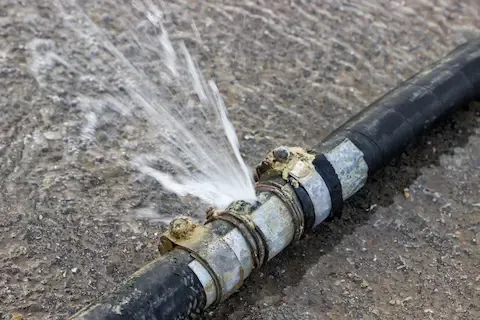
Pinhole leaks and visible corrosion at fittings are later-stage signs. By the time you're seeing staining on walls, wet spots in ceilings, or active drips at pipe connections, the interior of the galvanized system is typically in advanced deterioration. At that point, patching individual leaks becomes a losing battle because the entire pipe wall is compromised.
You should also pay attention to water taste and odor. Metallic taste in tap water that's otherwise treated and tested can indicate elevated iron levels from corroded supply lines. This isn't just unpleasant — it's worth investigating from a health standpoint as well.
Sectional Repair vs. Full Repipe
When homeowners first learn they have deteriorated galvanized pipe, the immediate question is whether the entire system needs to be replaced or whether repairs can be made section by section. The honest answer depends on how far the corrosion has progressed throughout the system.
Sectional repair makes sense in limited situations — when a specific section of pipe has failed due to a localized leak, when the rest of the system has been inspected and confirmed to be in better condition, or when a full repipe isn't feasible due to budget constraints and a temporary fix is genuinely needed. In these cases, the corroded section is cut out and replaced with copper or PEX, which connects to the existing galvanized lines.
The problem is that galvanized systems rarely fail in just one place. Corrosion occurs throughout the entire line simultaneously because every section has been exposed to the same water and oxygen conditions for the same number of decades. Replacing one section often reveals that the adjacent sections are just as compromised. Homeowners end up spending significant money on a series of sectional repairs that collectively approach the cost of a full repipe — but without the benefit of a completely renewed system.
A full repipe replaces all galvanized supply lines with modern materials, typically copper or PEX. Copper has a decades-long track record and resists corrosion effectively. PEX is flexible, easier to route through existing walls with minimal disruption, and highly durable. Both options eliminate the source of the problem rather than managing its symptoms. For Water Line Repair in Auburn homes with significant galvanized deterioration, a full repipe is usually the more cost-effective decision over a five to ten year horizon.
What the Repipe Process Looks Like
A common concern about repiping an older home is the extent of wall damage involved. Modern repipe work minimizes this by using strategic access points — small openings at key junctions — rather than opening entire walls. In many cases, PEX can be threaded through existing pathways with very limited drywall disruption.
The process typically involves shutting off the main supply, removing and replacing lines in sections while keeping portions of the home functional where possible, and pressure testing the completed system before restoring service. Work on a typical single-family Auburn home can often be completed within one to two days, though larger or more complex layouts may require additional time.
Auburn homes built during specific eras sometimes used a mix of materials — galvanized supply lines combined with copper or early plastic in later additions or renovations. A thorough inspection maps out exactly what's present before work begins, so there are no surprises mid-project.
Local Permitting and Inspection Requirements
Repipe work in Auburn requires a permit through the City of Auburn Building Department. This isn't a formality — the inspection process verifies that the new supply lines meet current code requirements, including proper support, correct material specifications, and pressure integrity. Permitted work also protects your home's value; unpermitted plumbing work can surface during real estate transactions and create significant complications.
A licensed plumber familiar with Auburn's local requirements handles the permitting process as part of the project scope. If you've had previous work done on your galvanized system and aren't certain whether it was permitted, that's worth clarifying before additional work begins.
Protecting Your Investment in an Older Auburn Home
Older homes near Auburn University and in established Auburn neighborhoods represent real value — architecturally, historically, and financially. Galvanized pipe deterioration is one of the more significant deferred maintenance items that affects these properties, and addressing it proactively prevents far more expensive damage down the road. Water damage from failed supply lines, mold growth inside walls, and structural damage from chronic slow leaks all carry costs that dwarf the price of a planned repipe.
Understanding how pressure reducing valve failures can interact with aging supply systems is also worth your attention — excessive pressure accelerates the rate at which compromised galvanized lines fail, creating a compounding problem that affects the whole system faster than either issue would alone.
If your Auburn home is pre-1970 and has never had a plumbing assessment, scheduling one is the practical starting point. Knowing what condition your supply lines are in gives you the information needed to make a deliberate decision rather than reacting to a failure.
