Reading Your Water Bill for Hidden Leaks in Auburn AL
An unexpected spike in your water bill often signals a hidden leak somewhere in your Auburn home's plumbing system. While small increases might reflect seasonal usage changes or rate adjustments, dramatic jumps of 25% or more typically indicate water flowing where it shouldn't. Reading your water bill correctly and understanding what the numbers reveal can help you identify potential leaks before they cause significant damage to your property and wallet.
Understanding Your Auburn Water Bill Components
Auburn water bills contain several key sections that reveal important information about your home's water usage patterns. The billing period typically covers 30 days, and your bill shows both current and previous readings from your water meter. The difference between these readings represents your total water consumption for the billing period, measured in gallons or cubic feet.
Most Auburn residents receive bills that display usage in hundred cubic feet (CCF), where one CCF equals approximately 748 gallons. Your bill will show the current meter reading, previous reading, and the difference between them. Additional charges may include sewer fees, which are often calculated based on water consumption, and various municipal fees.
Look for the usage history section, which typically shows your consumption over the past 12-24 months. This historical data becomes crucial when identifying unusual patterns that might indicate hidden leaks. Normal household usage in Auburn ranges from 3,000 to 10,000 gallons monthly, depending on family size, irrigation needs, and seasonal factors.
Identifying Unusual Usage Patterns
Hidden leaks often create distinctive patterns on your water bill that differ from normal seasonal fluctuations. Summer months in Auburn typically show higher usage due to lawn irrigation and pool maintenance, while winter consumption usually decreases. However, a hidden leak creates consistent elevated usage regardless of season.
Compare your current bill to the same month from previous years to account for seasonal variations. If your January usage this year is significantly higher than last January, despite similar weather and household activities, a leak might be present. Small leaks might add 1,000-3,000 gallons monthly, while significant leaks can waste 10,000 gallons or more.
Sudden usage spikes that don't correspond to increased household activities warrant immediate investigation. A toilet leak might waste 200-400 gallons daily, appearing as roughly 6,000-12,000 additional gallons on your monthly bill. Underground leaks often create gradual increases that become more apparent over several billing cycles.
Conducting a Preliminary Leak Assessment
Before calling professionals, perform basic checks to confirm whether elevated usage stems from leaks or other factors. Start by examining your water meter, usually located near the street in Auburn neighborhoods. Turn off all water sources inside and outside your home, including ice makers and irrigation systems.
Record your meter reading and wait 30-60 minutes without using any water. If the meter reading changes during this period, water is flowing somewhere in your system, confirming a leak exists. Some meters have leak detection dials that spin even with minimal flow, making small leaks easier to identify.
Check obvious locations first, including toilets, faucets, and visible pipes. Add food coloring to toilet tanks and wait 15 minutes without flushing. If color appears in the bowl, the toilet is leaking. Listen for running water sounds and inspect areas around water heaters, washing machines, and under sinks for signs of moisture or damage.
Professional Leak Detection Methods
When basic checks confirm a leak but you cannot locate the source, professional leak detection becomes necessary. Auburn's clay soils and older infrastructure make underground leaks particularly common, requiring specialized equipment to locate without destructive excavation.
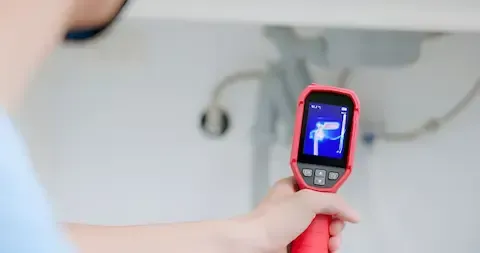
Professional plumbers use acoustic equipment to listen for the distinctive sounds of water escaping from pressurized pipes. These tools can pinpoint leak locations within inches, even when pipes run several feet underground. Thermal and acoustic leak finding techniques prove especially effective for locating leaks beneath concrete slabs or in areas where visual inspection isn't possible.
Electronic leak detection equipment can identify leaks in both metallic and plastic pipes by detecting changes in electrical conductivity or electromagnetic fields. Video pipe inspection allows technicians to examine the interior condition of sewer lines and water mains, identifying cracks, joint failures, or root intrusion that might cause leaks.
Common Auburn-Specific Leak Causes
Auburn's geological and climatic conditions create specific challenges that increase leak risks in local homes. The area's expansive clay soils shift significantly with moisture changes, placing stress on underground pipes and potentially causing joint failures or cracks. These soil movements are particularly pronounced during Auburn's wet springs and dry summers.
Older neighborhoods near Auburn University often have aging infrastructure installed decades ago when plumbing standards differed from current practices. Cast iron pipes common in these areas are susceptible to corrosion and eventual failure, while original copper installations may develop pinhole leaks over time.
Tree root intrusion represents another significant concern in Auburn's tree-lined neighborhoods. Mature oaks and other native trees develop extensive root systems that seek water sources, often penetrating older sewer lines or water mains through small cracks or loose joints.
Financial Impact and Insurance Considerations
Hidden leaks can dramatically impact both immediate utility costs and long-term property values. A moderate leak wasting 5,000 gallons monthly might add $40-60 to your Auburn water bill, while significant leaks can increase costs by hundreds of dollars monthly. Beyond direct water charges, sewer fees often multiply these costs since they're calculated based on water consumption.
Document unusual usage patterns and leak-related expenses for potential insurance claims. Some homeowners policies cover sudden leak damage but exclude gradual damage from long-term leaks. Understanding your policy's specific language regarding water damage helps determine coverage eligibility.
Prompt leak detection and repair often proves more cost-effective than delaying action. Water damage restoration, foundation repairs, and landscape restoration costs typically exceed immediate repair expenses. Professional leak detection services usually cost $200-500, while major water damage remediation can reach thousands of dollars.
Prevention and Ongoing Monitoring
Regular monitoring helps identify potential leaks before they cause significant damage or utility cost increases. Review your Auburn water bill monthly, comparing usage to previous periods and noting any unexplained increases. Many utility companies offer online account access that allows more frequent usage monitoring.
Schedule annual plumbing inspections, particularly for homes over 20 years old or those with known plumbing concerns. Professional inspections can identify developing problems before they become costly emergencies. Consider installing water monitoring systems that alert you to unusual usage patterns or potential leaks in real-time.
Maintain awareness of factors that might affect your home's plumbing system, including major weather events, construction activities, or landscaping changes. Auburn's climate and soil conditions make regular attention to plumbing health particularly important for preventing unexpected problems and maintaining property value.
